Well, not so much "yay" as "what the...?" There are some problems with the Georgia index. Some somewhat serious problems that could impact researchers.
First: badly indexed names. Now, some of this is due to bad images. I browsed a number of pages that were extremely difficult to read, probably based on bad microfilm copies. I'm sure the original records were destroyed long ago, so Ancestry can only work with the current microfilm. But the indexing problems go well beyond that.

There is no way that anyone searching for Smith would find this record. So how did I find him? I searched for my ancestor's neighbors in the corresponding population census, using the FAN Club approach to search for Friends, Associates & Neighbors.
Most of them were indexed badly as well, but at least "Brnmbelo" is close enough to "Brumbelo" to be found via soundex. Once I found this record I went through a portion of the page adding corrections to the names. Although this is the worst example that I've found so far, many of my other ancestors have indexing errors that should have been pretty obvious.
Second: mixing up the 1860 and 1850 records. I really don't understand how this happened, but let me start with a screenshot:

As you can see in the image, I was searching for anyone with the surname "Boatright" in Emanuel County, Georgia in 1850. I got results back for both 1850 and 1860. If I do the same search, but in 1860, I don't get any results. So it seems that the 1860 records have been placed in the 1850 category. Further, when you save an 1860 record to your family tree, it is saved with an 1850 date. This is not the only example of this that I've run across and I have reported this error to Ancestry.com.
So, if you are searching the Non-Population Census Schedules on Ancestry.com prepare to do some creative searching. I'm finding my ancestors and I'm coming up with some great information, but it's more difficult than it should be.



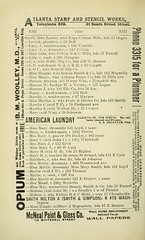
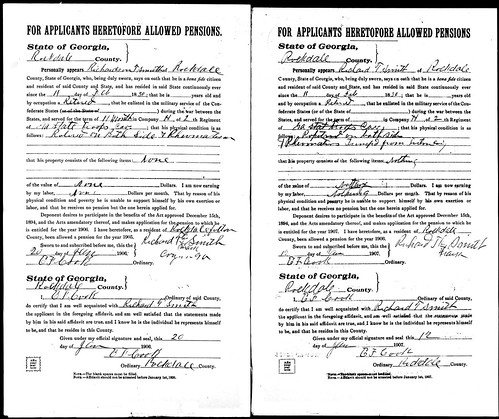
 were 7 Richard Smiths, two with the middle initial T recorded and none with wives listed. In order to confirm which Richard Smith was mine (if any), I needed to match the address given for him with another member of his family who was living with him. City directories are different from census records: not everyone is listed; usually only home owners and those in the work force are recorded in directories. Based on census records from this time, I knew that Richard worked in a cotton mill, as did the rest of him family. Those working should be listed and should share an address with their father. Sure enough, this was how I was able to identify Richard.
 I ended up doing a search for 'Smith' in Milton County, Georgia. I saw an R. L. Smith, five years younger than my Richard, which turned out to be him. Although none of the names or ages matched exactly, this was the family I was looking for. Here's a breakdown of the family in 1860, compared to 1870.
 Going backwards in time, I next found Richard in the 1870 census of Milton County, Georgia. With him were two of the previously known children, Richard and Sarah, as well as four new children: Pauline, Lucresy, Dumas, and Amanda. This Dumas was very close to the same age as Delmus from the 1880 census. I'm pretty certain that it is the same person.

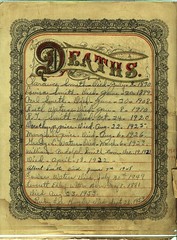
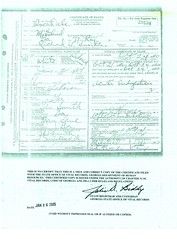
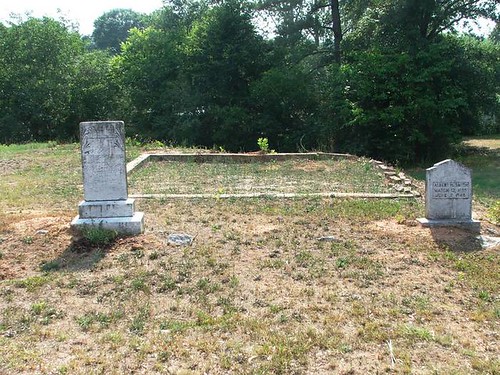
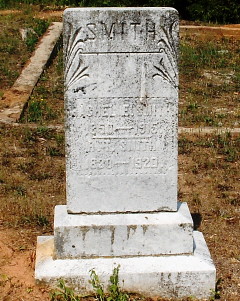
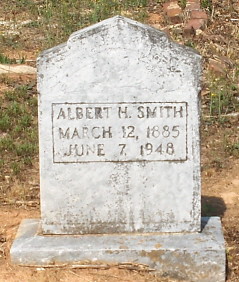
 Next I wanted to find information on Richard and Rachel's death. In the bible, I had a record of "R. T. Smith - Died Oct 24, 1920," which was probably Richard. I confirmed that this was a Richard from the Georgia Deaths Index on Ancestry.com and ordered a copy of his death certificate. Richard's death certificate indicated that his parents were George Smith and Mary Lane of Georgia. He was listed as having been buried in Milstead, the town where he last appeared in a census. Some research on the town of Milstead showed that this had been a mill village, complete with cemetery. Sure enough, graves for Richard, Rachel and son, Albert, were found in the Milstead community cemetery. The gravestone provided information on Rachel's death, which I had been unable to find. Unfortunately, she died a few years before death certificates were required in Georgia.